Description
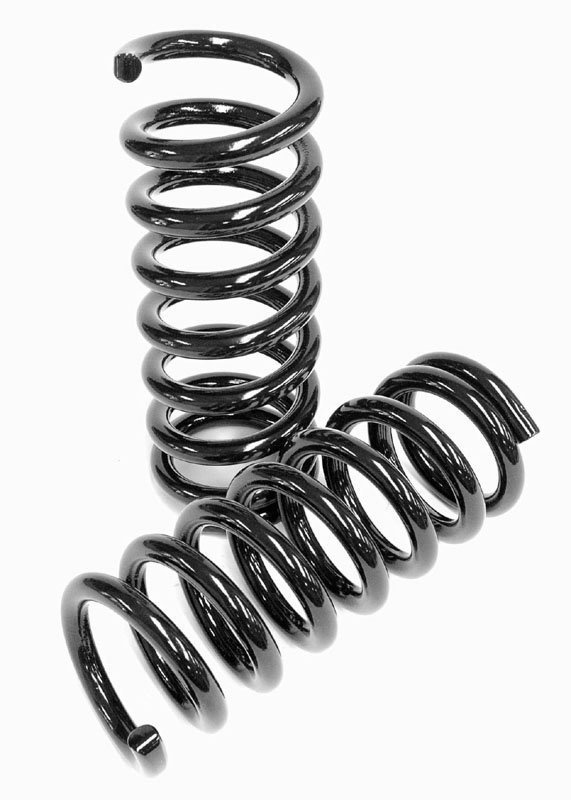
Global West highly recommends linear rate springs (also known as constant rate) over variable; not that variable rate springs are bad, but linear rate springs provide the best performance for our customers. Here are reasons why we prefer linear rate verses variable:
Consistency – As a linear is compressed, the resistance increases per inch equal to that of the rate. For example, if a spring is rated at 300 pounds per inch, for every inch of travel the spring compresses, the resistance increases 300 pounds. Therefore, one-inch of compression will provide 300 pounds of resistance, two-inches 600 pounds, and three-inch 900 pounds. Variable rate springs, however, do not increase in the same fashion. The are generally rated with a lower spring rate on initial, and build to the desired rate. Example: The first one-inch of travel might start out as 250 pounds per inch, the second-inch 560, and the third 900. For a driver who is looking to improve their driving skills, a vehicle must give predictable feed-back each time during cornering and trail braking. A linear spring will do that because the rate is consistent.
Less chance of bottoming-Lowered cars always have reduced suspension travel. The lower you go the less travel is available. Variable rate springs tend to allow more travel before the spring can build rate, keeping the suspension from bottoming. The question is: Is there enough suspension travel available while the spring builds enough resistance (rate) before bottoming occurs?
Variable rate springs tend to over emphasize the geometry curve giving us more tire movement than necessary.
Chassis diagnostics is difficult.
Lowered Springs
Our springs generally lower the vehicle one-inch in the front and up to 1-1/4 inches in the rear depending on the option for your vehicle. Why we only lower about one-inch in the front is simple, there is not enough suspension travel beyond one-inch for street applications. We admit, vehicles lowered one-inch look great, but they generally run into suspension bottoming problems. Header to ground clearances tend to be another issue. Therefore, in our experience, we believe one-inch makes the most sense especially if the care is driven on the street.
Premium Front Coil Springs for 1964–67 A-Body Vehicles
Quality is at the heart of our 1964–67 Front Coil Springs for small and big block applications, ensuring that your classic A-Body—whether it’s a Chevelle, El Camino, or Pontiac GTO—receives the best performance possible. Our commitment to excellence means you can count on us for support every step of the way. With comprehensive instruction sheets and detailed video tutorials, we make installation straightforward, even for those new to DIY projects. Plus, our dedicated customer support team is always just a call or message away, ready to assist with any questions or concerns you may have. Elevate your ride’s performance and handling with our expertly crafted springs, and don’t forget to explore more options in our Springs & Spacers category or check out our Pontiac Coil Springs for additional enhancements tailored to your classic muscle car.